

Fine Line Tattoo Ideas
Understand fine-line tattoo characteristics, suitable subjects, placement choices, scale, spacing, and long-term readability.
What defines fine line tattoo ideas
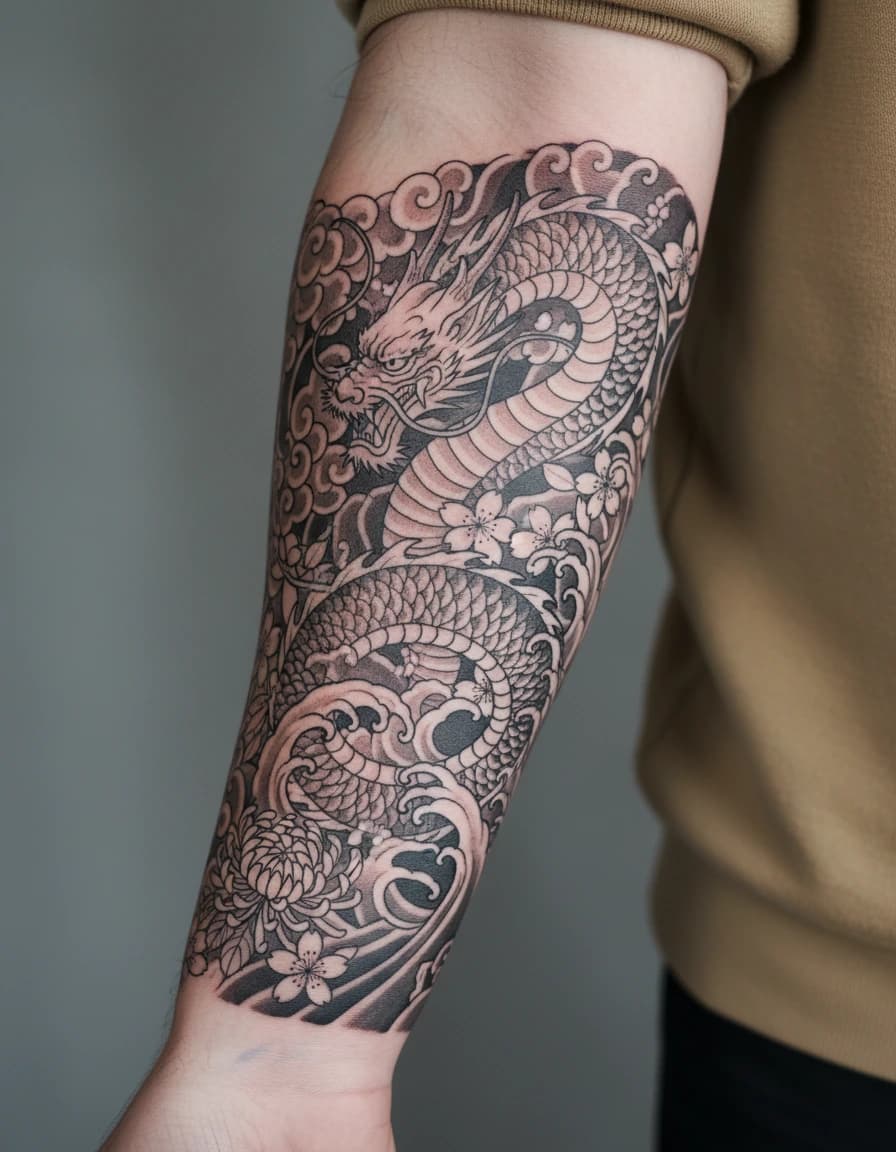
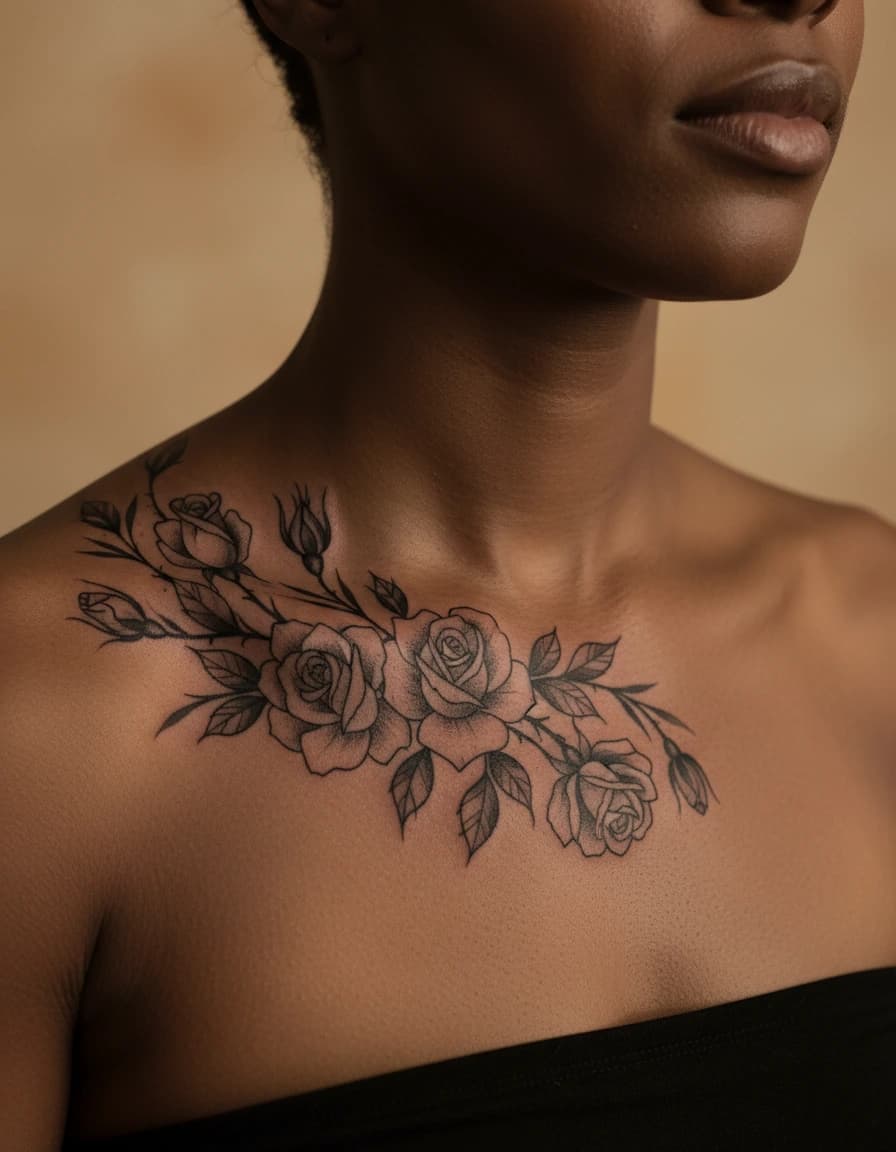
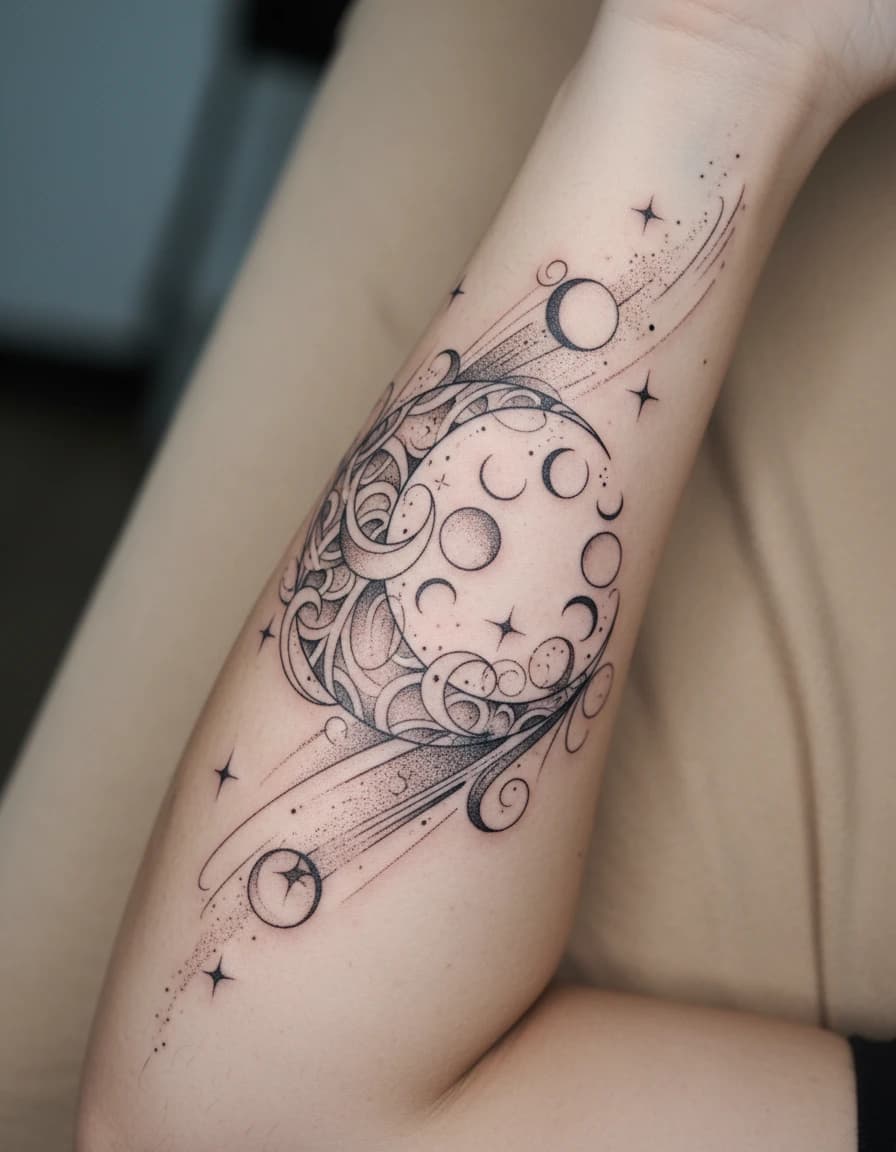
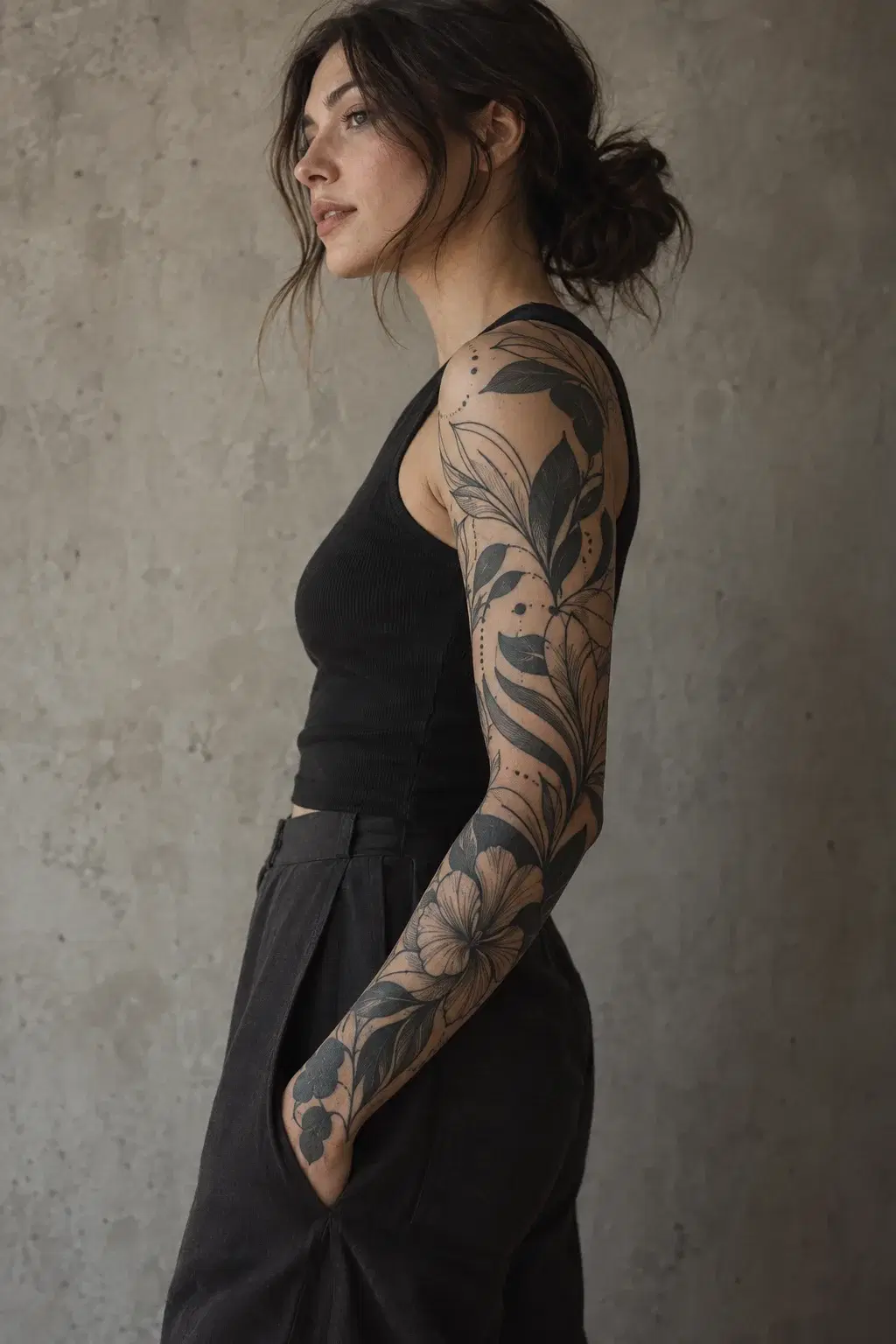
Fine-line tattoos use thin, deliberate lines and restrained shading to create a light visual weight. They suit botanical forms, small symbols, script, portraits, and simplified illustrative subjects, but the design still needs enough scale and spacing to remain readable as skin and ink change over time.
- Suggested style
- Fine line
- Starting placement
- Forearm
- Next step
- Save two or three references
Characteristics of fine-line tattoos
The style is defined by line weight and visual restraint, not simply by making any drawing tiny. Strong fine-line work uses clear hierarchy, intentional negative space, and only the detail the final size can support.
- Thin, controlled outlines
- Limited or delicate shading
- Open negative space
- Simplified detail at smaller scales
- A light, precise overall silhouette
Subjects and variations
Single-stem botanicals, insects, celestial symbols, personal objects, animals, lettering, and compact portraits can all suit fine line. A design may be purely linear or combine fine outlines with stippling, soft grey wash, or one darker anchor for contrast.
Placement and aging considerations
Forearms, upper arms, shoulders, ribs, thighs, and ankles can provide stable space, but the exact choice depends on scale and anatomy. Fingers, hands, feet, and areas of frequent friction may need different expectations and maintenance.
Ask to see healed work from the artist. Adequate spacing, sensible scale, careful application, aftercare, and sun protection matter more than a promise that one needle configuration will never change.
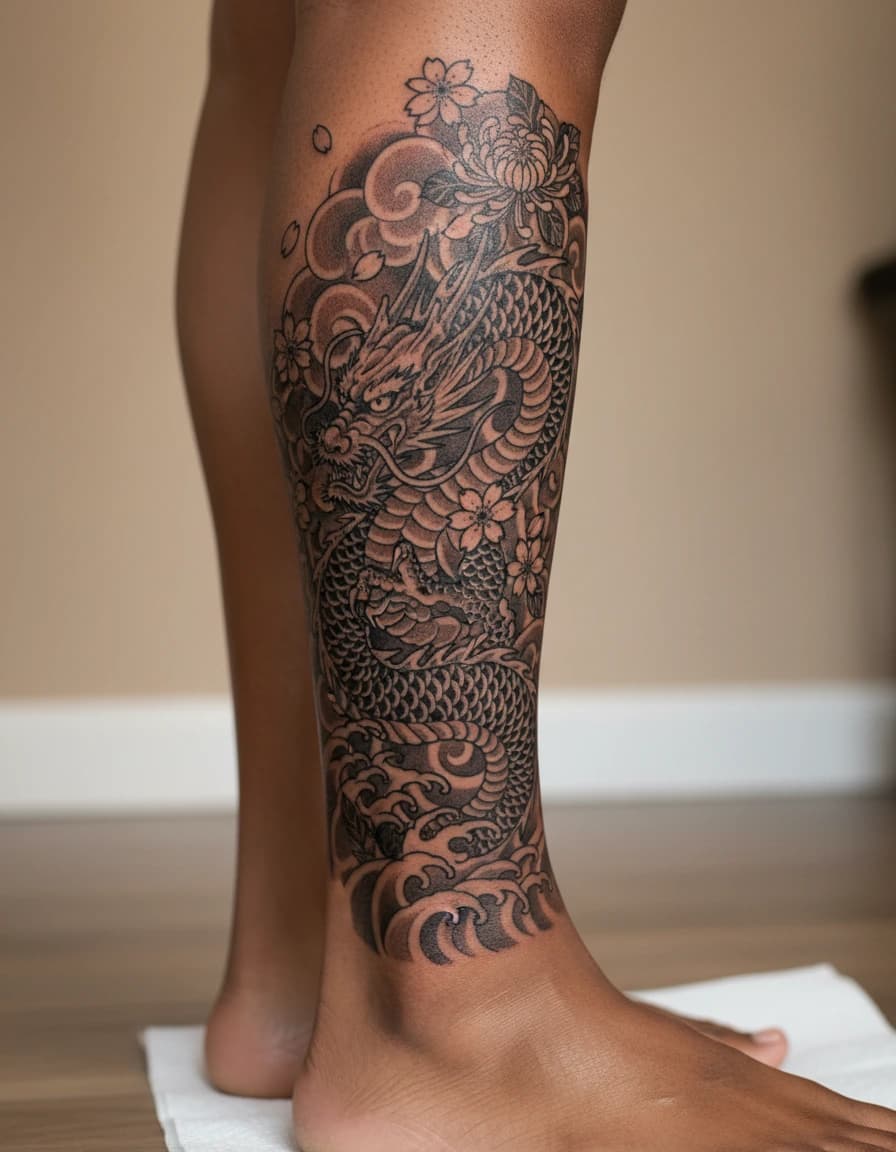
Connect meaning, style, placement, and design
Useful questions
Do fine-line tattoos fade faster?
All tattoos change over time. Very tight detail can lose separation; appropriate scale, spacing, application, healing, and sun protection help preserve readability.
Can any design become a fine-line tattoo?
Not without editing. Dense shading, tiny textures, and complex overlaps may need simplification or a larger size.