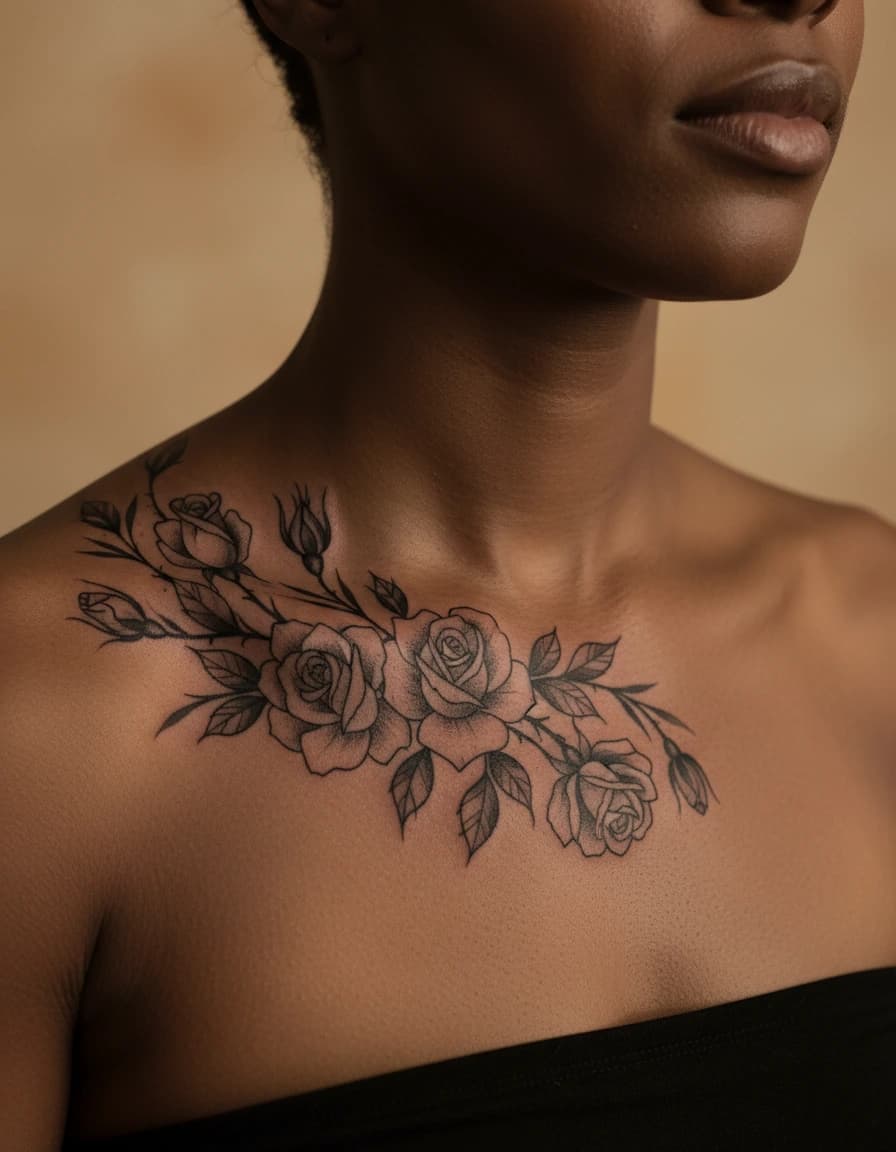
Blackwork rose
Blackwork · Collarbone


Plan a cohesive tattoo sleeve with themes, focal points, transitions, negative space, joints, and long-term artist collaboration.
A coherent tattoo sleeve is planned as one composition around a moving arm, with major focal points, transitions, repeated visual language, and deliberate skin breaks. Decide whether the sleeve is a unified project or a collection, protect space around joints, and involve the artist before committing the anchor pieces.
A full sleeve can be a unified narrative, one continuous ornamental or abstract flow, or a collected sleeve linked by spacing and repeated visual cues. None is automatically better, but each needs an early decision about style, palette, background, and how separate subjects connect.
Place the largest subjects where the arm offers useful viewing surfaces: shoulder cap, outer upper arm, and forearm. Treat the elbow, inner arm, and tapering wrist as transitions or specialized focal areas rather than leftover gaps.
Ask for a full-arm mockup from several directions. A sleeve must work from front, side, and back with the arm both relaxed and bent.
Session count depends on scale, style, detail, color, healing, artist pace, and appointment length; there is no responsible universal estimate. Discuss sequence, deposits, healing intervals, budget, and whether the same artist will complete the project.
If building gradually, share the long-term goal before the first piece. Protecting negative space and useful anchor positions early is easier than trying to connect unrelated work later.
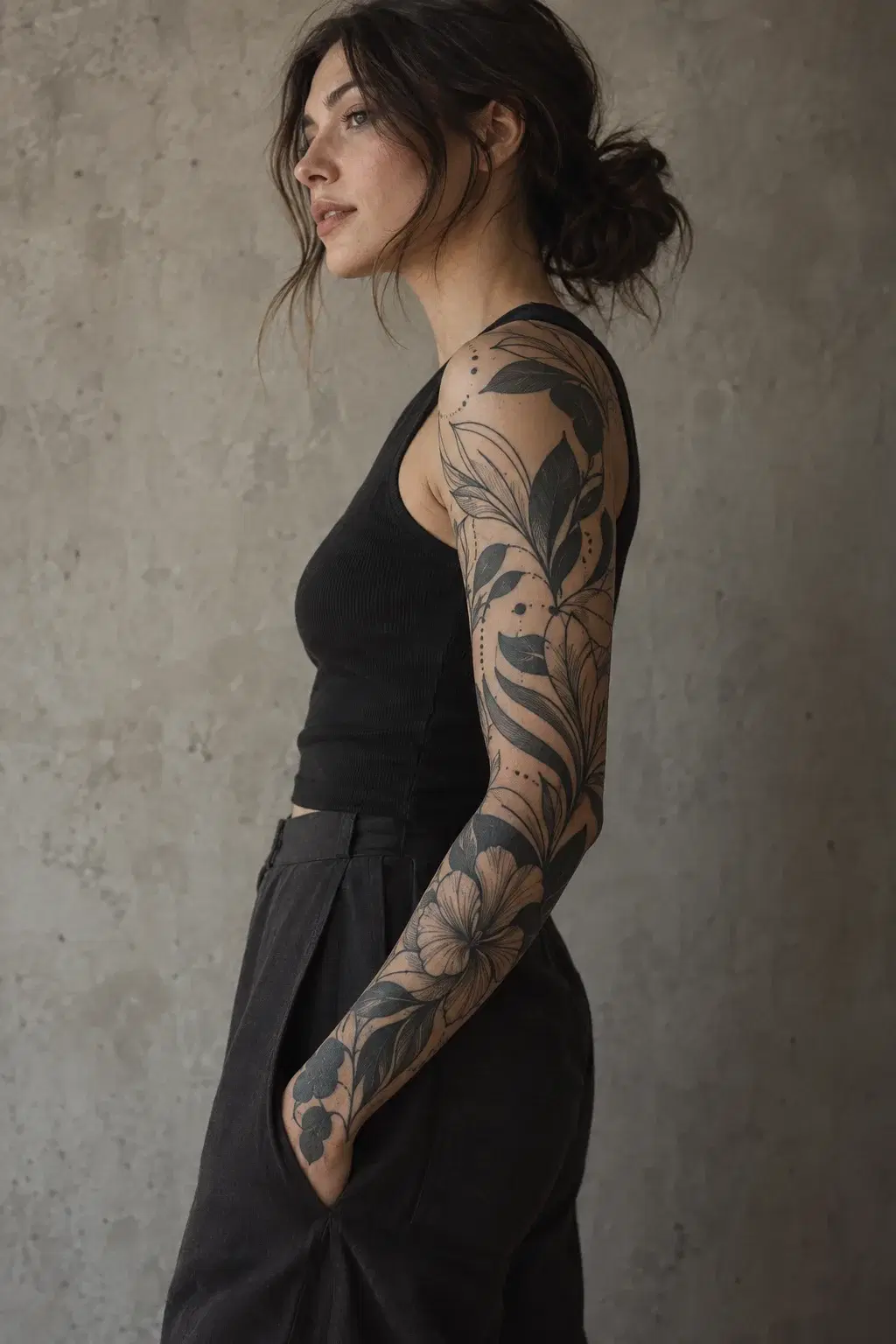
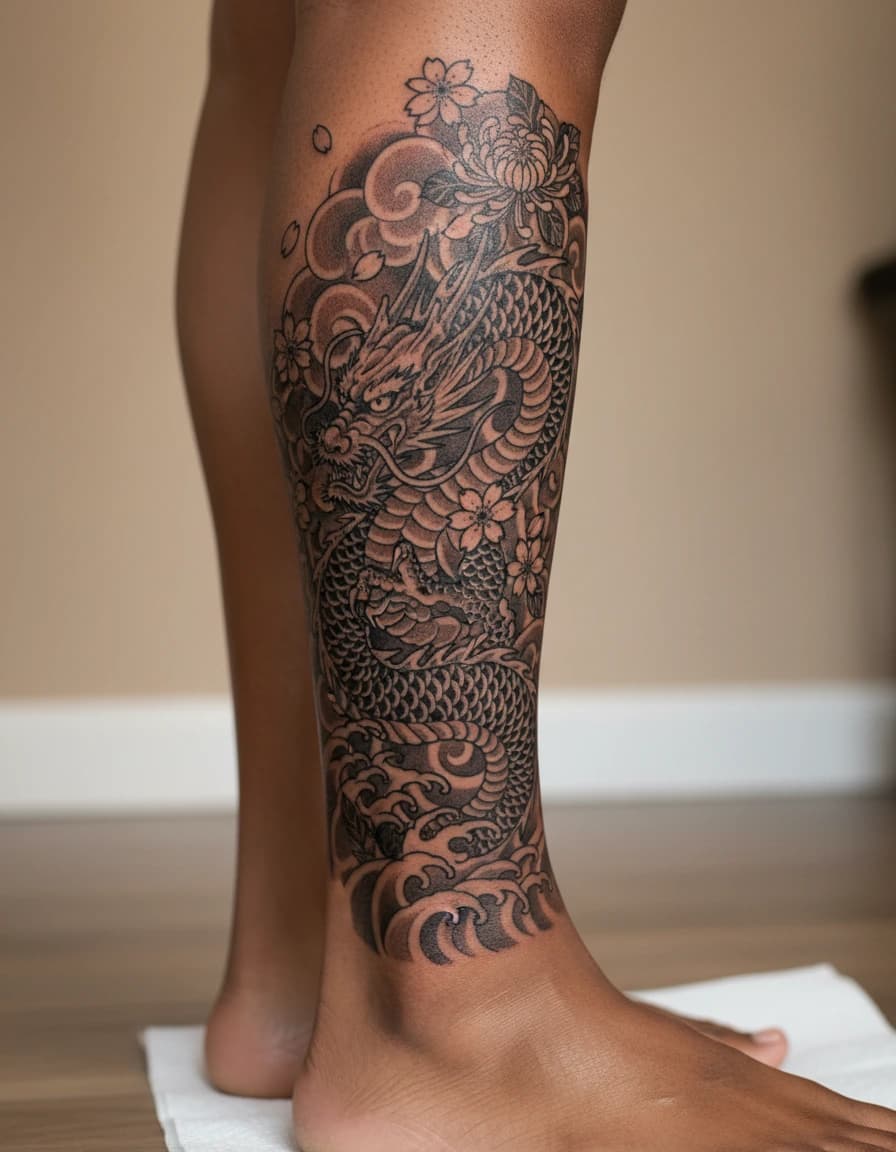
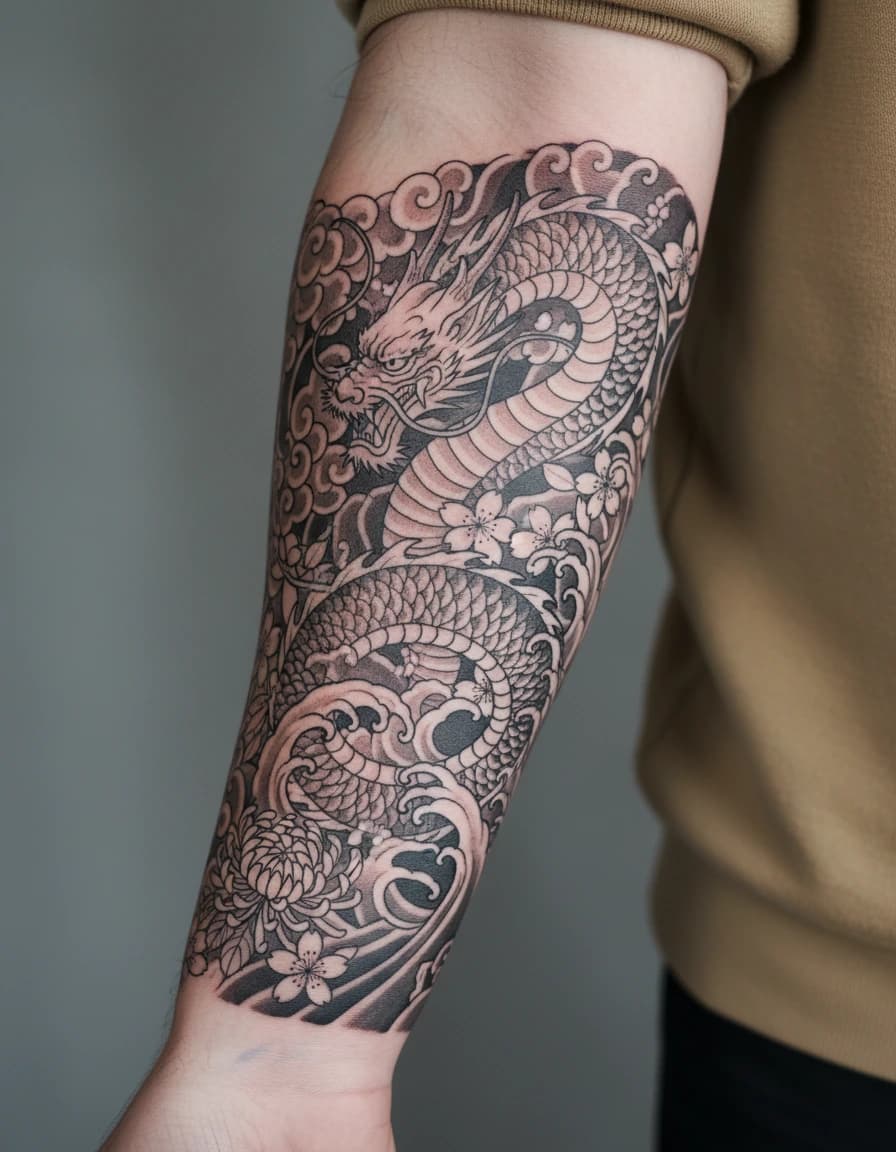
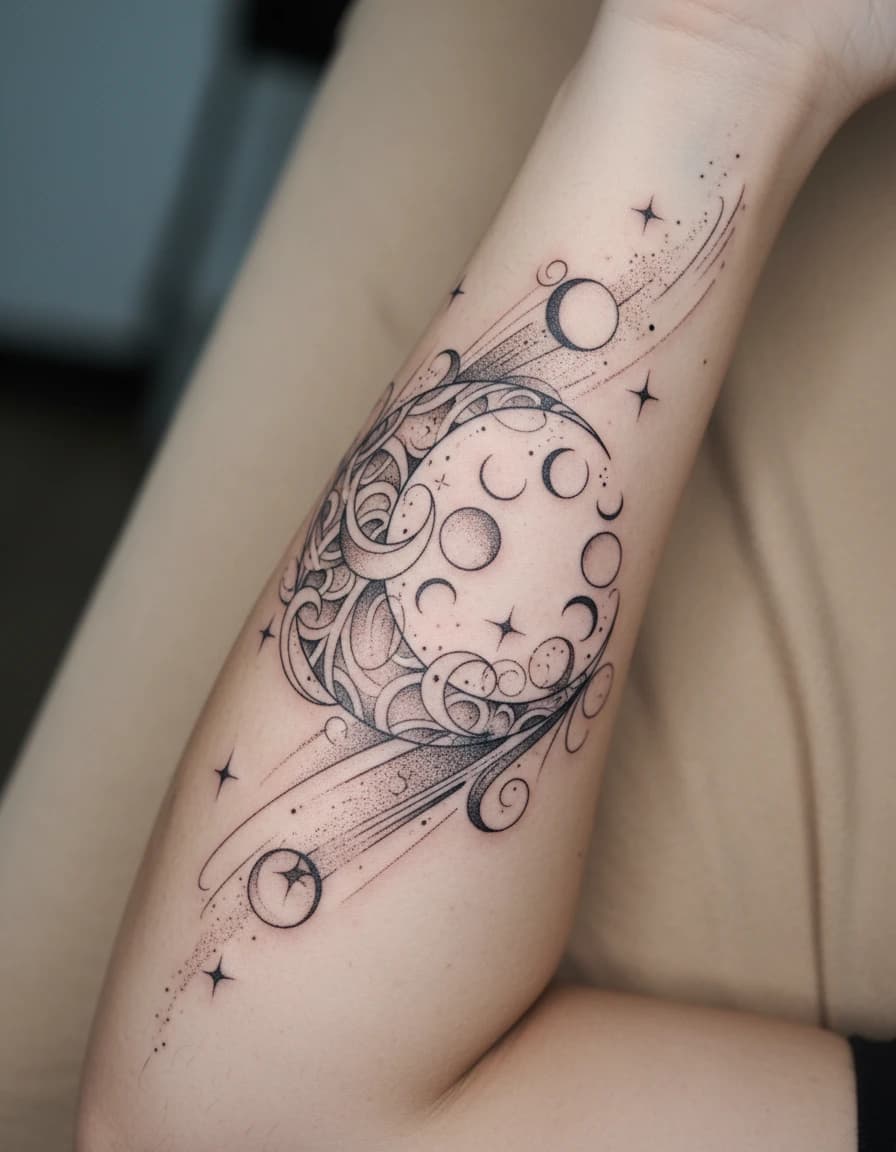
If a sleeve is the likely goal, early planning protects focal areas, spacing, and transitions even when the work will be completed gradually.
It varies substantially with size, detail, color, style, healing, and session length. Only the chosen artist can estimate after planning the arm.